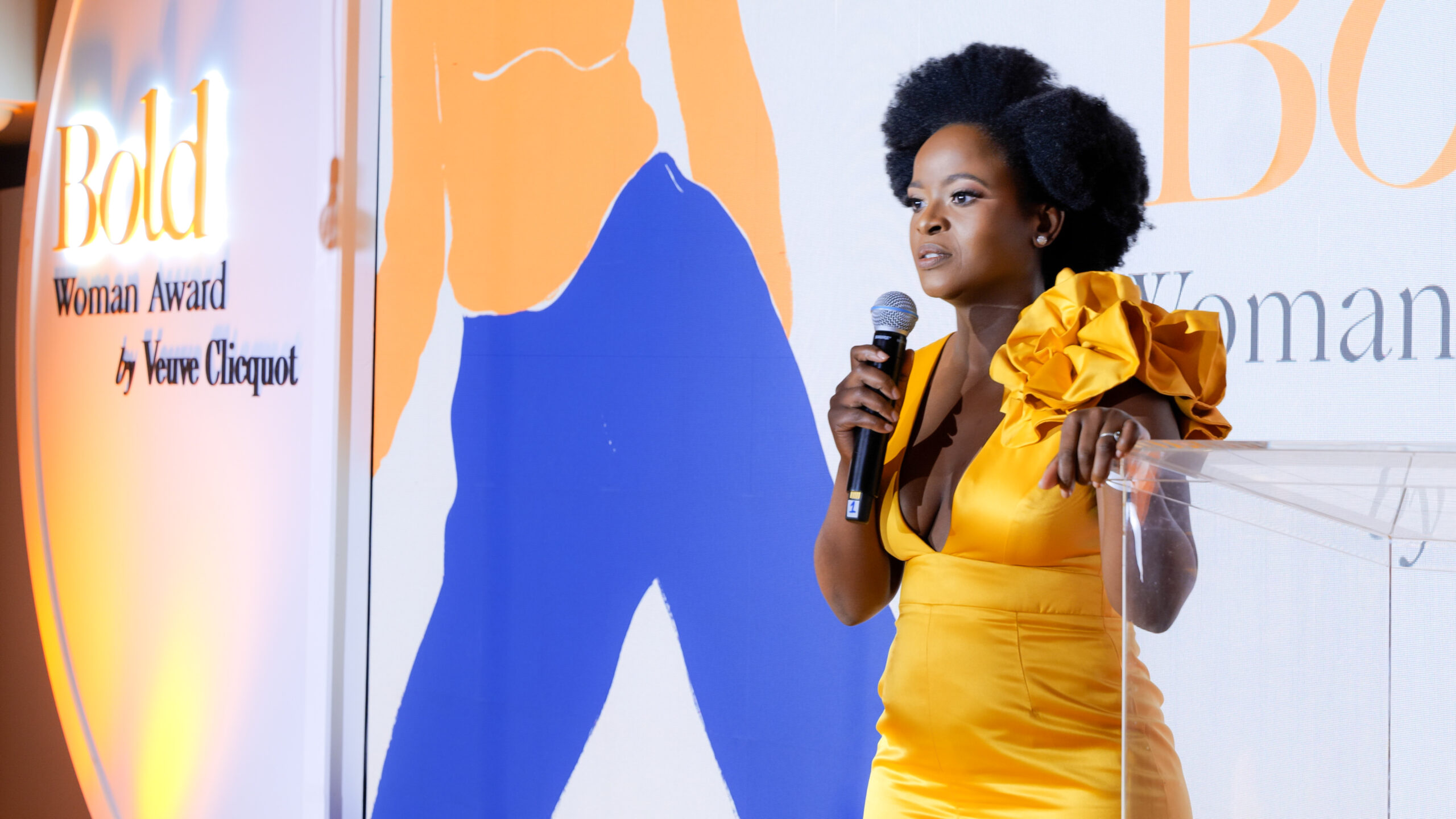
1. Since your 2022 Veuve Clicquot Bold Future Award win, how has Womaritime Experts expanded in terms of geographic footprint, industry partnerships or funding secured?
Womaritime Experts has matured in how we show up. Our offerings are clearer, our delivery confidence stronger, and our partnerships now feel less like “supporting Londy” and more like co-creating a meaningful pipeline of work and opportunity within the maritime industry.
Since 2022, one of the biggest shifts has been in structure. We’ve moved from passion-led impact, what many call “hustle”, towards systems that can sustain the work over time. As a business leader, that has been an important milestone. The impact no longer depends solely on momentum; the organisation can continue moving forward even when the founder is not running on adrenaline.
Today, Womaritime operates through several purposeful touchpoints: our core maritime consulting work, Global Maritime Youth as our non-profit impact arm, and Unlocking Oceans Economy, which creates space for knowledge- sharing and innovation programmes that keep the sector vibrant and inclusive.
The Veuve Clicquot Bold Future Award also accelerated my credibility as a CEO and founder. It shortened the “prove it” cycle with decision-makers I had long hoped to collaborate with.
2. Have you had a “pinch me” moment since winning the award?
Yes: two, and they were very different.
The more cinematic moment happened in Reims, Champagne, standing inside the Maison of Veuve Clicquot and reflecting on Madame Clicquot’s audacious story. Having a vine baptised and assigned to me felt surreal. It was the kind of moment you normally see in films and think, that could never be my life. And yet there I was, Londiwe, standing in that space.
In that moment, I felt both the weight and the beauty of visibility. Even when you have felt small or overlooked, your willingness to keep showing up can become someone else’s permission slip to imagine more for themselves.
The most remarkable part is that the story continues. As long as I keep showing up authentically and exploring what is possible, I am living in my “pinch me” days.
3. Maritime remains male-dominated. How has your visibility as a Bold Future Award winner shifted
conversations about women in this sector?
There have always been bold women in my industry. Simply entering a scarce-skills sector like maritime already requires courage and conviction.
What I’ve learned over the years is that meaningful change rarely happens by trying to confront gender dynamics head- on. Many of the rooms I have entered are led by men, and collaboration in those spaces required me to meet people as people. Interestingly, many of my mentors in the early years were men, simply because that is what the industry landscape looked like when I entered it.
What I’m seeing now is a genuine shift. The conversation is no longer about whether women belong in the maritime sector; it has moved toward accountability and representation. Globally, even on panel discussions, the question has shifted from “Wow, a woman did it” to “Why are there not more?”
Our Secretary-General at the International Maritime Organization, Mr Arsenio Dominguez, has gone as far as stating that panels should not proceed without female representation. That level of leadership has begun changing the tone of industry dialogue and the outcomes of events. It is powerful to witness.
4. In what ways has your leadership approach evolved as your impact footprint has grown?
Interestingly, I have become less attached to being the face of the work and more focused on building the framework that allows others to step in and contribute.
Early in my career, leadership felt like proving that I could stand alongside the men in the industry. Over time, I realised that many doors were not closed out of malice, but out of long-standing conditioning. Expanding what people believe is possible when a woman leads with competence and calm authority has been a meaningful part of the journey.
Today, my leadership looks more like building a vessel that others can board easily. We have clearer standards, stronger systems, intentional collaborations and a deeper respect for pace and process.
I have also learned that courage in business does not always come from the next launch or announcement. Sometimes the bravest decision is setting boundaries, choosing alignment over applause and committing to the quiet work thatmakes excellence repeatable over time. Growth can happen away from the spotlight.
In industries as complex as maritime, collaboration is essential. Many of our most meaningful wins have emerged from trusted partnerships and shared responsibility, often beginning with conversations at industry gatherings. The energy of experts meeting in person still carries a different resonance than even the most successful online conversations.
5. What does it mean to be part of a South African Bold alumni community across diverse industries?
Very early on, I realised that the Bold alumni share a similar mindset: disruption is not treated as a personality trait but as a responsibility.
Many of these women have built what they could not find and led in spaces where they were not always welcomed. That creates a strong sense of shared understanding.
The alumni network has also become a safe space. Being first can be uncomfortable, even when the outside world perceives it as glamorous. The reality is that the journey can feel lonely and, at times, misunderstood.
Within this community, we remind one another that lifting as we rise matters. Celebrating personal success is important, but creating pathways and permission for others carries even greater meaning. That shared commitment keeps us focused on the work.
6. What would you say to emerging founders building businesses in unconventional or underrepresented industries?
First, well done for being “too much.” In many ways, that already places you ahead of what people are used to. Do not shrink your vision to fit someone else’s comfort.
Secondly, build credibility through consistency. Talent may open doors, but delivery keeps you in the room. My personal brand forms part of my group company and contributes more than 20% of our annual turnover. Expertise matters, but so does recognising the value of your voice.
Thirdly, do not build alone. Find collaborators who respect your mission, not just your momentum. Collaboration goes far beyond investors and clients; it also includes the people who support your life behind the scenes – your team, your family, even the everyday support structures that allow you to keep showing up.
Finally, understand the conditioning you may be working against. Many founders, particularly women, are taught that being liked is the same as being respected. They are not the same. Choose respect. Choose impact. And claim your captaincy.