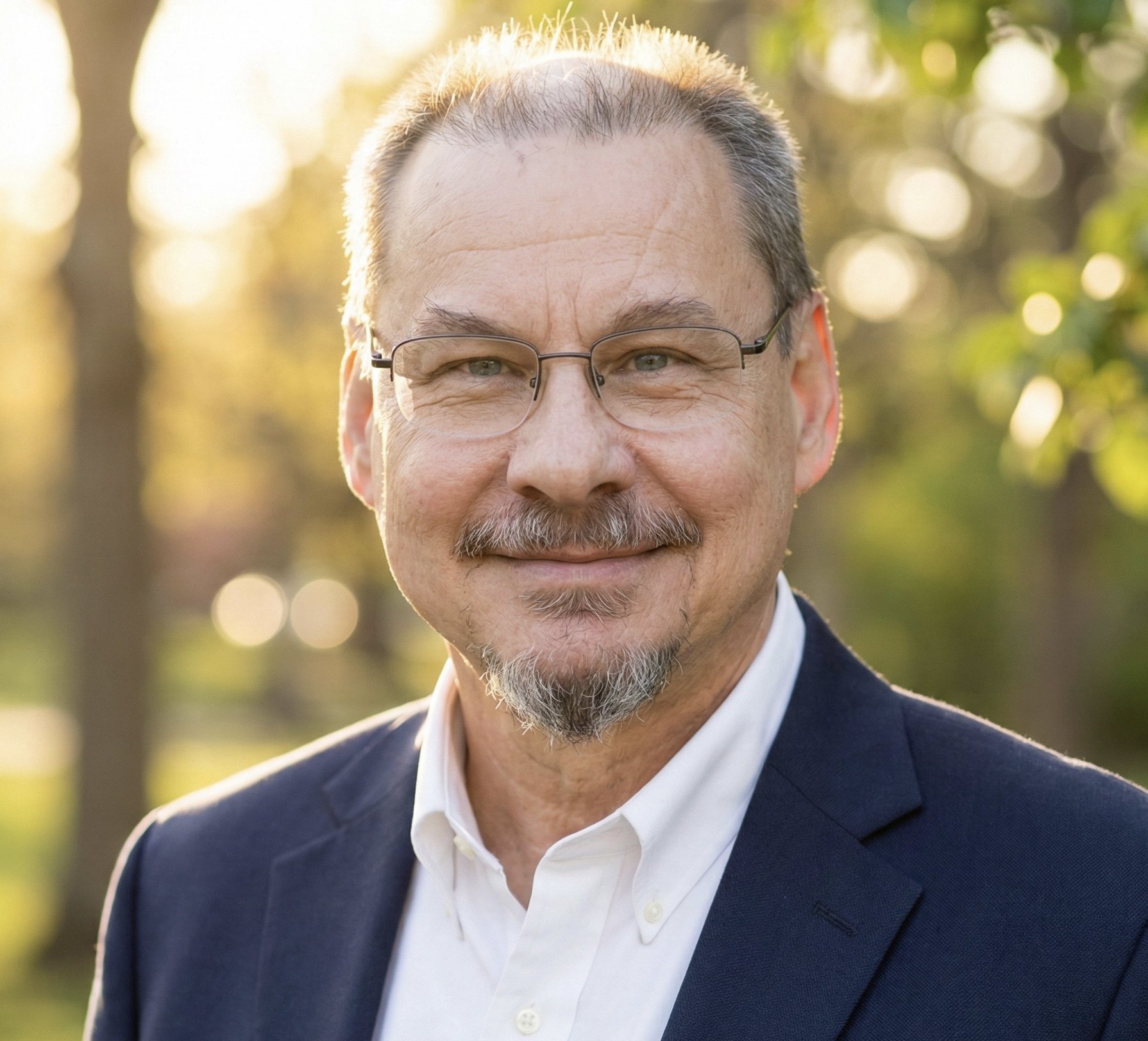
Dr Jan Mentz says future IT professionals will need creativity, empathy and independent thinking as much as technical skill
“Information technology is closer to social science than pure engineering,” says Dr Jan Mentz, newly appointed Head of School for Information Technology at STADIO Higher Education, who believes the future of IT education lies not only in technical proficiency, but in understanding people, systems, and human behaviour.
Mentz’s career spans nearly three decades in higher education, including leadership and academic roles at Belgium Campus iTversity, UNISA and Tshwane University of Technology.
As institutions around the world grapple with how to prepare graduates (particularly in information technology) for a rapidly changing digital economy, Mentz believes the answer lies in rethinking what IT education is really for.
“I characterise IT education as learning the skills needed to utilise technology towards enabling human action,” he says, adding that a human-centred understanding of technology is becoming increasingly important as artificial intelligence, automation and digital systems reshape workplaces and industries.
“First and foremost, the skill that we must nurture is that of independent thinking,” Mentz says. “The ability to evaluate the world critically and solve problems with the clear intent to serve humanity.”
He also believes empathy and creativity will remain essential capabilities for IT professionals, even as technologies continue to evolve.
“The IT professional that is able to listen and pay attention to the problem experienced by a human will be able to solve it effectively,” he says.
IT as a creative problem-solving discipline
Mentz says institutions often make the mistake of treating IT education as purely technical or mechanistic, rather than as a creative problem-solving discipline.
“In my opinion, institutions forget that the typical IT education is closer to creative skills development than a mechanistic mastery of frameworks and principles,” he says. “Thinking out of the box and experimentation must be encouraged and allowed. Failure and learning by doing must have a place and not be punished.”
STADIO says Mentz’s appointment aligns with the institution’s focus on producing graduates who are both industry-ready and adaptable in a changing world. “We’re thrilled to welcome Dr Mentz to the team,” says Dr Stan du Plessis, CEO of STADIO Higher Education. “His vision for IT education aligns strongly with STADIO’s belief that higher education should prepare graduates not only for the jobs of today, but for a lifetime of learning and meaningful contribution in a rapidly changing world.”
A multidisciplinary approach
Mentz says one of the aspects that drew him to STADIO was its emphasis on widening access to higher education and its multi-disciplinary academic environment.
“STADIO provides a multi-school platform to showcase the interdisciplinary nature of IT as an enabling discipline,” he says.
He believes the most exciting developments in technology increasingly happen at the intersections between disciplines.
“The overlap is numerous and, in a way, IT cannot truly be regarded a standalone discipline,” Mentz says. “We must educate collaboratively across disciplines.”
Mentz holds a PhD in Information Systems from the University of South Africa and has supervised numerous postgraduate research projects in areas including enterprise architecture, digital systems, e-learning, cloud migration and business capability development.
At STADIO, he says, his goal is to help shape graduates who understand both technology and the people it is meant to serve.
“I want to show the market that a STADIO IT professional understands human activity and is able to provide the kind of solutions that serve human purposes rather than the other way around.”