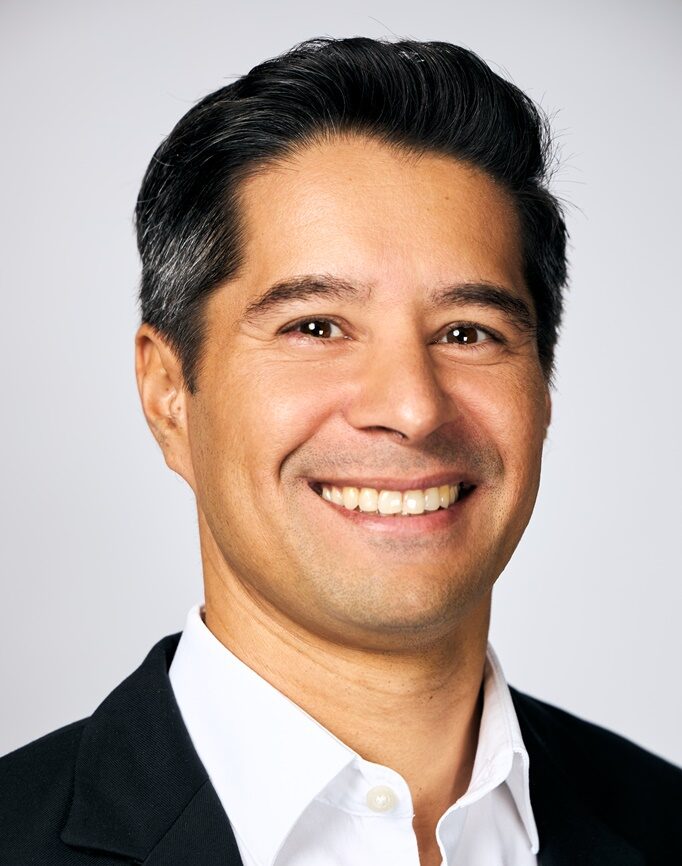
Lead Portfolio Manager at Old Mutual Global Islamic Equity Fund, Maahir Jakoet, writes about lessons learned from over a decade of Islamic Fund management success.
We live in a world of genuine uncertainty. Geopolitical fragmentation, policy volatility, the rise of artificial intelligence, and periodic market shocks have made the investment landscape feel more complex than ever. In times like these, investors are rightly asking: where do I find resilience?
One answer to this question that is increasingly compelling – and perhaps still underappreciated – is Shari’ah-compliant investing. Not just for Muslim investors, but for anyone who values quality, discipline, and downside protection. After ten years of managing the Old Mutual Global Islamic Equity Fund, I can say with conviction: this approach works, and the track record speaks for itself.
The essence of Shari’ah investing
Contrary to popular belief, Shari’ah-compliant investing is not exclusively for the Muslim community – a healthy proportion of OMIG’s Shari’ah fund investors are non-Muslim. General investor interest is growing in the approach, driven largely by the emerging understanding that it is not a constraint on performance, but rather a framework that sharpens it.
When it comes to investment application, Shari’ah is rules-based rather than score-based. Within these rules, there are two tests that matter most.
The first is a core business activity screen. We cannot own companies where the bulk of revenue comes from alcohol, tobacco, gambling, conventional financial services like banks and insurers, weapons manufacturing, or adult entertainment. Banks are of special concern, especially as financials make up roughly 18% to 22% of an index like the MSCI World., which is also the case for most conventional global equity benchmarks. If this sector is removed, then other sectors get upweighted to make up for this.
The second test is mathematical. We use a number of quantitative ratio screens, the most important of which caps debt at 33% of asset value or market capitalisation. Take conventional banks and all non-permissible companies out, then de-lever the remaining universe by that rule, and you end up with a fundamentally different portfolio. There’s a related allowance worth understanding here. A company can still qualify if it earns a limited amount of ‘non-permissible income’ (up to 5%), provided it also meets the debt test
In truth, these tests are adequate for the creation of a resilient portfolio, but we know the only tangible way to prove efficacy is through the historic lens of real crises.
Resilience when it matters most
When considering how Shari’ah investing holds up during stressed markets, let’s start with the 2008 Global Financial Crisis. The MSCI World Index fell roughly 54%. The equivalent Islamic index, the MSCI World Islamic Index, fell to around 42%. Both drew down, but that gap is meaningful when compounding lands in the recovery period – as compounding takes place off a higher baseWhy did this happen? It was a credit event and leverage was high. We’d already taken the banks out of the equation, so the Shari’ah benchmark simply outperformed.
COVID-19 was a different kind of crisis. It was a liquidity event rather than a credit event, but the pattern held. Again, Islamic indices fell less. That came down to the same mechanism in a different form. When you take financials out, some other sectors get upweighted. Given the debt ratio, that tends to mean asset-light businesses. Tech was soaring at the time, which meant a stronger recovery.
The 2022 rate shock followed a similar credit-and-leverage logic, with a milder drawdown. And in the 2026 Middle East conflict, high-quality, de-levered energy exposure benefited. Across all four periods, our fund held up better than its conventional counterpart.
What drove a decade of outperformance
When looking at the fund relative to that same-old MSCI World conventional benchmark over three, five, and ten years, we’ve outperformed it every time. The last decade has been defined by a structural overweight to information technology, which was the largest single contributor and a natural consequence of an asset-light, de-levered opportunity set.
The second-biggest contributor, after tech, came from healthcare. Specifically, Novo Nordisk , which between has come to control much of the diabetes and weight-loss medication market. From a quality point of view, these are genuinely quality businesses, with a strong growth story behind them too.
This kind of success isn’t a one-hit wonder story. Over the long term, the numbers consistently stack up, which is entirely the point.
Let’s be honest about the limitations
I can’t claim Shari’ah is a fund for all seasons. In a bull market, where inflation isn’t a concern and credit is suddenly cheap, this fund tends to have a headwind. That is only because there simply isn’t enough leveraged growth in the opportunity set to keep pace.
But here’s what I’ve learned managing money: if somebody else is delivering 25% and I’m delivering 23%, the phone doesn’t ring. Nobody complains in a good year. It’s on the downside that people start asking hard questions about exposure, and that’s when the protection matters most. Of course, we aim for the upside, but it’s the downside protection investors are really paying for.
What sets our fund apart?
While we manage the fund systematically, it’s actively managed, not an index fund. The aim is to cap downside risk while delivering the best return. We use a Sortino ratio within our model to find the best risk-adjusted outcome across the characteristics we care about: value, quality and growth.
What differentiates this from a passive Shari’ah-compliant index tracker is that the process keeps evolving. Because we’re quantitative and systematic, we can track new signals, add them, remove them, and always refine the bottom-up process. On top of that sits the portfolio construction itself. Tracking error bands, sector bands, country limits, it favours rules over narrative to keep the noise out.
The lesson isn’t that every investor should choose a Shari’ah fund; but rather that the rules investors choose matter more than most realise. In a market increasingly driven by short-term narratives, there is value in a framework that forces discipline before the next crisis arrives.