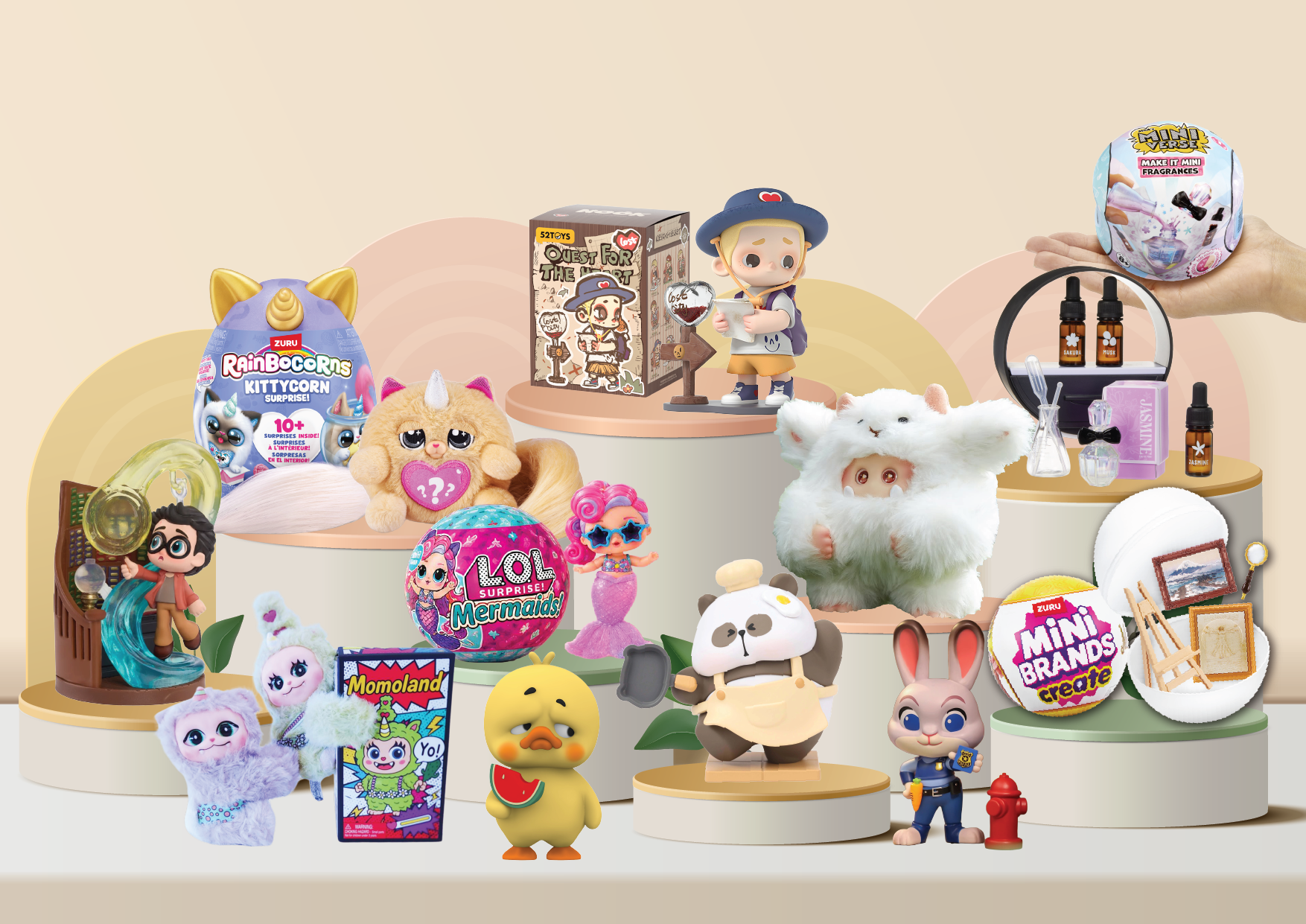
South Africans are buying around 240 blind collectibles a day from Toys R Us, with sales across the category growing amongst people of all ages, as the global fascination with mystery toys, collecting and unboxing culture gathers momentum locally.
Blind boxes are emerging as a particularly fast-growing part of the category. Toys R Us sales data shows blind-box sales are now more than ten times higher than in the comparable period last year, driven by growing demand for established ranges and a significant expansion in the number of brands available.
Since the start of the retailer’s financial year in March, more than 41,500 blind collectibles have been sold across Toys R Us stores and online, spanning blind boxes, eggs, capsules and other surprise formats.
Within that wider category, more than 4,400 blind boxes have been sold – around 26 every day – as the format increasingly moves into mainstream toy and pop culture.
While much of the global conversation has been fuelled by Pop Mart and the frenzy surrounding characters such as Labubu, Toys R Us says its South African sales tell a broader story.
“What we’re seeing isn’t about one brand or one character,” says Catherine Jacoby, Marketing Manager at Toys R Us South Africa. “There is something about the combination of collecting, surprise and discovery that consumers really respond to.
“Mini Brands, Rainbocorns, Squishmallows, 5 Surprise, Miniverse, Pets Alive, L.O.L. Surprise and Pop Mart are among the ranges attracting local buyers, suggesting consumers aren’t simply chasing one viral character,” she explains. “They’re buying into collecting itself.”
Why buy something when you don’t know what’s inside?
“The thrill is that you don’t know exactly what you’re going to get, and that anticipation has become part of the experience,” Jacoby says. “It is a retail proposition that seems to break one of the basic rules of shopping: know what you’re buying.”
Blind collectibles conceal their contents until opened, with buyers receiving one item from a wider collection. Rarer finds encourage collectors to hunt for favourites, complete sets or swap duplicates.
“There’s an emotional journey built into a very small product, which turns a purchase into a reveal,” says Jacoby. “You choose it, you wonder what’s inside, and then you have that moment of discovery.”
“That combination of anticipation, collectability and the possibility of finding something unexpected has helped transform the humble msystery toy into a global phenomenon,” she explains. “Opening the toy has become the entertainment, with social media adding another dimension.”
“Unboxing has become a content category in its own right, with TikTok and Instagram filled with collectors revealing rare finds, showing off collections and trading duplicates,” she adds. “Anticipation, reveal and reaction can all happen within seconds.”
“The experience doesn’t necessarily end when somebody buys the product anymore. Opening it can become something they film, share and talk about, and then someone else sees that reveal and wants to experience it themselves,” she says. “The physical product and digital culture around it are increasingly connected.”
Collecting has grown up
“The growth of the so-called ‘kidult’ consumer – adults buying toys and collectibles for themselves – has increasingly blurred the line between traditional toys, fandom, nostalgia, fashion and pop culture,” she adds. “Collectibles lend themselves particularly well to this crossover because they’re small, displayable and often linked to recognisable characters or design worlds.”
For younger buyers, she adds, the appeal may be play and surprise; for teenagers and adults, it can be about completing a collection, nostalgia, design, fandom.
“Adults don’t suddenly stop enjoying discovery or collecting because they’ve reached a certain age,” says Jacoby. “What has changed is that it’s become far more culturally acceptable for adults to participate openly in toy and collectible culture.”
More than a viral moment
“The breadth of Toys R Us’ sales is perhaps the strongest indication that blind collecting is bigger than any single internet craze,” she says. “We have more than 30 collectible brands and ranges in our stores, including many exclusives that sold thousands this year.”
“The underlying behaviour of collecting, trading, hunting for rare finds and sharing the reveal has much greater staying power than a viral moment,” she adds. “Trends inevitably come and go, but what we have seen over the past three years suggests collecting itself has longevity.”
“With more than 41,500 blind collectibles sold in less than six months, South African consumers appear increasingly willing to embrace that sometimes not knowing exactly what you’re buying is half the fun,” Jacoby concludes.