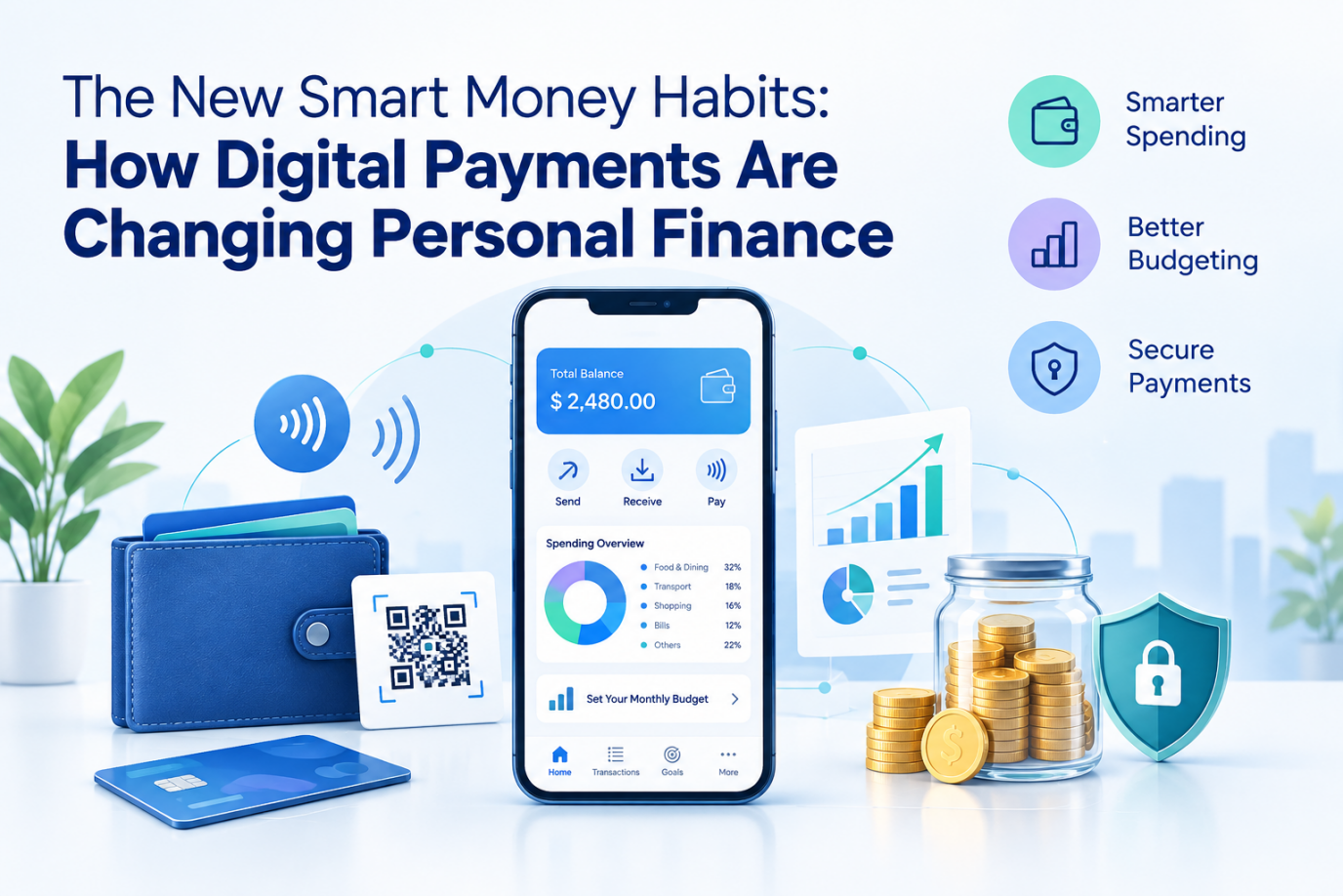
Cash has not been replaced, but cash no longer has the monopoly over the day-to-day choices around money. Today, all these activities can be done by cards, wallets, bank transfers, QR codes or one-click checkout tools. That change is significant, since payment behavior now isn’t solely about convenience. It’s altering the way consumers budget, how quickly they spend, how often they shop around, and how vigilant they are in guarding themselves against scams.
The biggest difference is this: Digital payments have transformed personal finance from a once-monthly process to a habit. Many households looked at their spending only when they got to the bank statement or counted the money remaining in their wallet. From now on, each tap, each transfer and each in-app notification is recorded. With that visibility comes a chance for people to be more mindful about their finances, and that can be a good thing. When misused, however, digital payments can make careless spending easier.
This is precisely the contradiction that underlies contemporary money management practices. Tools that facilitate our everyday lives can also be tools of overspending. The new wise ways of handling money are far from being an attempt to renounce digital payment methods, they are all about learning to manage them without making them convenient.
Digital payments are turning money into a daily feedback loop
Digital payments are impacting personal finance at such a rapid pace partly because they reduce the lag time between a decision and the financial impact. Once set up, a card or wallet payment generates an alert in seconds. A banking app categorizes a transaction almost instantaneously. A family can view, on the same day, how much was spent on transportation, subscriptions, take out or school supplies.
This sort of visibility does the trick of changing behavior. Those who review their spending on a regular basis are more likely to notice waste, identify duplicate charges and take corrective action before an expensive month turns into a bad week. Rather than a statement shock, they can adjust on the fly.
This is particularly true in a market such as South Africa, where consumers are employing a wider range of payment options, but also navigating day-to-day pressures throughout the market. According to more than 90% of the consumers surveyed, more than 90% of South Africans have embraced a new payment method during the last year, ranging from instant EFT and bank-based payments to digital wallets and Pays hap. That’s a telling sign people are not simply learning new things just because they are in fashion. They are experimenting with tools which are faster, cheaper, safer and better for their way of living.
The smartest users are not only paying differently; they are budgeting differently
Traceability is the best thing about digital payments from the point of view of finance. With all transactions leaving traces, it makes budgeting much less about remembering and much more about documentation. This is why intelligent people base their money management on such information.
Rather than trying to figure out where the money went after the month ends, they analyze patterns on a regular basis. They listen to reminders of apps that notify them of transactions. They divide recurring expenses into those that cannot be changed and those that can. They set weekly budgets for ordering take-out, entertainment, and impulsive spending. And thanks to being searchable, they can make comparisons between different months.
This behavior is important because spending money digitally is much less painful compared to using cash payments. Payment becomes quick, there is less friction involved, and the pause becomes less significant as well. This works great in situations where we need to pay our bills in time, but it is dangerous in cases where every purchase becomes invisible to us. The solution is not in going back in time but to add the necessary friction where needed: setting up transaction alerts, setting savings goals, tracking weekly expenditures, and deleting cards from apps used for impulsive purchases.
Convenience is now part of financial wellness
For many consumers, convenience used to be seen as something luxurious. Convenience is currently part of financial wellbeing. A payment experience that is quick, trusted, and reliable helps to eliminate late fees, missed payments, and obligations in an efficient manner. When effective, digital payments help to achieve better financial organization.
However, the reverse is also true. The consumer’s approach to shopping and financial planning is negatively impacted by failed payments, a bad checkout process, and timing of debit transactions. This can be expensive, evidenced by the findings from the study carried out by Stitch in South Africa. After a failed payment, 71% of consumers admit that they stop using the product, while about 62% of them stop for good. Failure to pay from the consumer’s point of view means more than having trouble making payments. This might lead to extra charges, missed discounts, transport costs as you go back to complete the purchase elsewhere, or just poor financial planning.
That is why today smart consumers prioritize reliability together with price when making decisions about payment methods. The payment methods which settle payments quickly, confirm instantly and fit the rest of consumer’s lifestyle become highly valuable for people.
Security habits are becoming money habits
The more digitized the transactions are, the less the problem of security remains one of technology. It is a personal finance field. Any breach of a digital wallet, any malicious link, or any unexpected deduction can destroy the result of weeks of disciplined budgeting way faster than one thoughtless purchase.
The good news is that customers are already developing the skill to connect signs of trust with sound financial behavior. According to Stitch’s research, the South African consumers think that two-factor authentication, biometric approval, and clear privacy policies all make them trust the checkout process, while pop-ups, redirects, and too many requests for personal data are alarming. These feelings should be nurtured since now proper finance handling also involves recognizing the legitimacy of the transaction process.
This tendency will only gain momentum. According to J.P.Morgan’s 2026 payments outlook, companies start making investments in fraud prevention systems powered by artificial intelligence and digital identification technologies due to the growing speed and irreversibility of payments. So for the consumer, the lesson is clear: strong passwords, passkeys, biometric verification, instant card locking, and account monitoring become musts rather than optional.
Digital tools are changing how people think about cash
Cash remains an option in the personal finance sector, even with the increasing adoption of digital forms of payment. According to the 2026 Diary of Consumer Payment Choice by the Federal Reserve, Americans kept making on average six cash transactions per month, and cash remained the third most preferred payment option behind credit/debit cards. The lesson transcends the American market as the need for diversity is not necessarily overcome with digitization.
The South African statistics show a trend like that seen in Nigeria. People continue to use cash because it offers practical advantages such as the inability to pay with other means, payment fees, and payment controls. In fact, 39% of those who use cash in the study conducted by Stitch cited cash management of personal spending as one reason why they use cash. This is an example showing that the optimal personal finance strategy is not ideological but adaptive.
The smartest course of action is not selecting either of the two sides of cash versus cashless payments argument but knowing the benefits of each method. The former slows down spending and makes limitations more tangible, whereas the latter allows for increased transparency and faster payments.
The new payment mix is teaching consumers to optimise, not just transact
A decade ago, many people just used whatever the bank issued them to pay. Nowadays, people tend to select the moment-dependent method. They can pay via digital wallet quickly at the point of sale, bank transfer with reduced friction online, credit card for purchase protection, and cash when it is not possible to pay digitally due to fees or connectivity.
This way of thinking is money-making. It’s about people using payment methods like tools with a different strength each time than buttons. So, the decision on payment has become a component of money strategy.
This is also where rewards, transaction fees, settlement speed and budgeting options are more important than ever. A convenient method of payment is not convenient if it results in overspending, reoccurring bank charges or poor record keeping. Similarly, a tried-and-true technique might not be the best one available if there is a more efficient and transparent technique. Smart consumers are now asking themselves better questions: Will this assist me to monitor spending? Does it decrease risk? If it has an extra charge, am I charged more for it? Does it match my actual budget?
Five smart money habits for the digital-payments era
- Check transactions on a weekly basis, not a monthly basis. The sooner a small leak is detected the easier it is to repair.
- Match the mode of payment with the purpose. When using the tool, choose the one best suited to that kind of expense that balances speed, security and control.
- Find friction for temptation. Remove saved cards from risky apps and leave the alerts turned on.
- Consider fraud prevention to be part of your budget protection. Safe account is for safe real money circulation and not just information.
- Maintain a single backup storage. It’s whatever it takes, whether it’s cash, a second bank card or another wallet, resilience is a component of financial health.
Digital payments are no longer a sub-story in the financial lives of individuals. They are becoming integral to the nitty gritty of how people make money, spend money, save money and protect themselves from risk. The households which will get the most value out of digital payments are not going to be the early adopters of all payment trends.
The real opportunity lies in forming good habits about the technology one already uses. A tap payment can take just a second, but the habits formed around it will determine one’s future financial life.