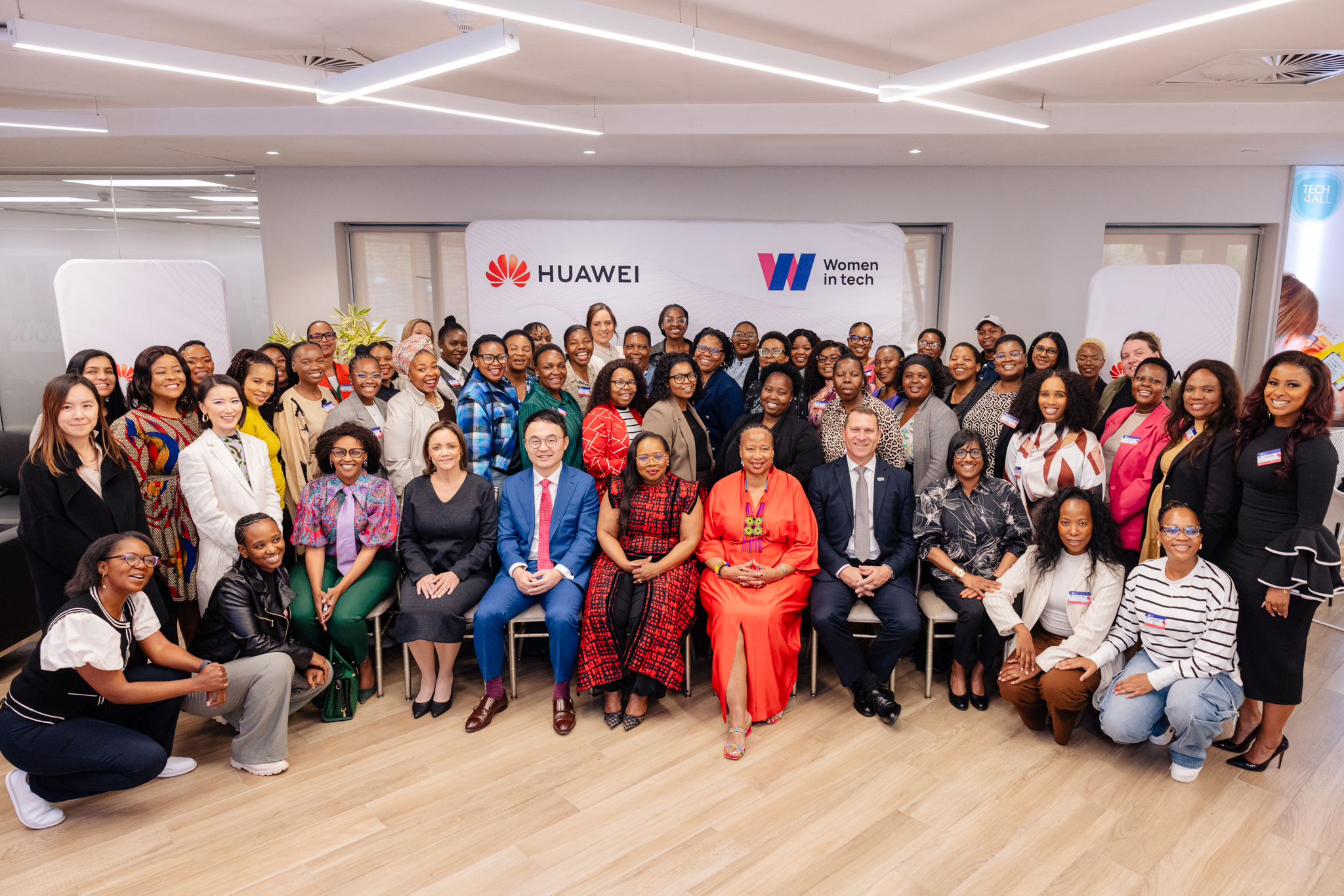
Businesswomen and public-sector leaders gathered in Johannesburg last week for the latest edition of Huawei’s Women in Tech Digital Skills Development Programme, three days built around a simple idea: capability compounds.
Women walked into a Johannesburg training room last Wednesday morning with businesses to run and, in many cases, a nagging sense that artificial intelligence was something happening to them rather than something they could use.
Three days later, that feeling was beginning to shift.
Huawei South Africa opened the latest edition of its Women in Tech Digital Skills Development Programme on 26 August, marking the close of Women’s Month with its biggest cohort yet: 50 businesswomen and public-sector leaders brought together for an immersive programme focused on technology, leadership and enterprise growth.
And while the language around AI can sometimes feel intimidating, the message in the room was surprisingly simple.
You don’t have to wait for the future.
You can build it.
Vanashree Govender, Head of Public Relations and Communications at Huawei South Africa, set out why the room existed in the first place.
“Purpose: to give professional women and entrepreneurs real access to the technologies that are shaping our world, because when women understand tech, they can shape it too,” Govender said. “Our goal and vision is about reducing the digital gender divide and also encouraging a digital-first mindset for entrepreneurs. That’s the vision.”
The programme has been running since 2021, and this was its largest intake to date. Govender welcomed government representatives, industry leaders and tech media before handing over to a lineup of speakers who, across the morning, were unusually aligned on one message: the AI economy is being built right now, and women should be holding the tools rather than waiting for an invitation.
The theme carries that idea in its name: HERabytes: Small Business. Big Intelligence.
It is doing more work than wordplay usually does.
In technology, capacity is measured in megabytes and gigabytes. HERabytes proposes another unit entirely: the knowledge, skills and intelligence women are building and using to grow their businesses.
And it is cumulative by design.
One insight sharpens a decision. One tool gives back an afternoon. One new skill can open a market that was closed on Monday.
Multiply that across 50 women, and the potential becomes considerably bigger than the three days they spent in a training room.
Technology is the easy part
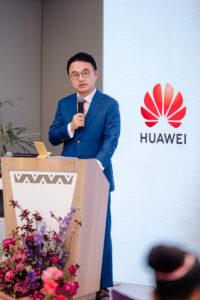
Charles Cheng, Deputy CEO of Huawei South Africa, opened with the infrastructure story: the connectivity, cloud, computing and data centres sitting behind a digital economy forecast to grow between 12% and 15% a year.
Then he put it all in its place.
“Technology has value because of what people can do with it,” Cheng said. “Innovation becomes meaningful when it creates opportunity, strengthens businesses, and enables more people to participate in the economic possibilities technology creates. We want women entrepreneurs to be firmly part of that future.”
It is a quiet inversion of the usual corporate script, and the whole programme rests on it.
Build the best network in the country and it is still just cable until someone uses it to reach a customer she could not reach before.
Give someone AI and cloud computing and the technology is still only a tool until she knows what to do with it.
That is where skills matter.
Not invited afterwards. Building it now.
Nonkqubela Jordan-Dyani, Director-General of the Department of Communications and Digital Technologies, arrived with the sharpest framing of the morning.
Digital inclusion, she argued, is not complete when a woman gets a device and a data bundle. It is complete when that connection turns into value, income and economic participation.
“An AI economy that excludes women will not reach its potential,” said Jordan-Dyani. “That potential sits right here. A digital economy that includes women is stronger, more innovative, more competitive and more resilient. Women must be recognised as the future leaders, the innovators and the creators.”
Note the tense. Not eventually. Not once the technology settles down.
Now.
The question, as she put it, is no longer whether this transformation is happening. It already is. The only open question is whether women end up as architects of it or spectators to it.
Shoki Tshabalala, Deputy Director-General at the Department of Women, Youth and Persons with Disabilities, delivered Minister Sindisiwe Chikunga’s message of support and pushed the point further still.
“Women, young people and persons with disabilities must not only use technology. They must design it, maintain it, sell through it, build businesses around it and share in the income it creates,” Tshabalala said. “Women must be at the epicentre.”
The Minister’s address did not soften the context.
Statistics South Africa recorded five million young people aged 15 to 34 unemployed in the second quarter of 2026, with the youth unemployment rate at 47.4%.
No single programme can absorb a number like that.
But that does not make the work any less important.
The address also mapped where the opportunities actually sit: specialist roles in software, cloud, data and AI; digitally enabled services such as bookkeeping, design and online sales; and local platforms in transport, delivery, tourism, care and professional services.
The message was that women must be more than users of these technologies. They must be the people building businesses around them and sharing in the income they create.
There was a challenge attached.
Build the bridge, the Minister asked of Huawei, from training to certification, from certification to a first contract, and from that first contract to a livelihood.
A certificate must lead somewhere.
A rare piece of timing
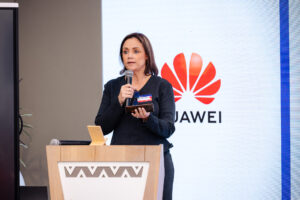
Christina Naidoo, COO of Huawei South Africa, made the case that this cohort has caught the wave at an unusually good moment.
“Artificial intelligence is accelerating what is possible,” Naidoo said. “A small business can use AI to understand customers better, improve marketing, analyse information faster, forecast demand or automate work that once took hours. For South African women entrepreneurs, this is a rare opportunity. We do not have to arrive at the end of this technology wave and spend years catching up. We can be part of shaping it from the start.”
That is the line to carry out of the room.
Previous technology shifts reached South African women late and second-hand.
This one has not, yet.
And perhaps that is what makes this particular moment so interesting.
AI is still new enough for the rules to be written. Businesses are still figuring out what it means for them. Entire industries are still working out which jobs will change and which new ones will emerge.
There is no finished playbook.
For women who have historically been left behind by technology, that creates a rare opportunity.
There is still time to write themselves into the first draft.
Naidoo also placed the programme inside a longer commitment. More than 350 graduates have come through Huawei’s local Graduate Programme since 2017, alongside the ICT Academy and a global pledge to help millions of women build digital skills.
The leader behind the tool
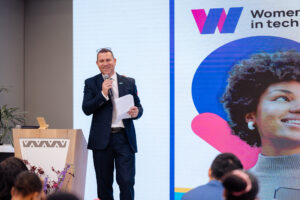
Dr Jacques le Roux, COO of Henley Business School Africa, closed the loop, and it was the closing that mattered.
“AI can help us work faster,” le Roux said. “It can help us see patterns that we might otherwise miss. It can offer options, automate routine work, and open doors that were previously closed. But AI cannot decide who we want to be as leaders. It cannot choose our values. It cannot take responsibility for our actions.”
The more powerful the tools become, he argued, the more intentional the leadership has to be.
Busyness can feel like leadership.
It is not the same thing.
Over the following two days, the 50 women worked through AI, 5G-Advanced and cloud computing before the programme closed at Henley on 28 August with leadership development.
But the real measure of the programme will not be what happened inside that training room.
It will be what happens when those 50 women go back to their businesses, their organisations and their communities.
It will be the invoice generated faster because AI took care of the admin. The customer reached through a new digital channel. The small business that can finally compete with a bigger one because it has access to tools that were once out of reach.
It will be the woman who stops thinking of AI as something that belongs to someone else.
And starts using it as hers.
The tools were the beginning of the story.
Where they get pointed is the rest of it.