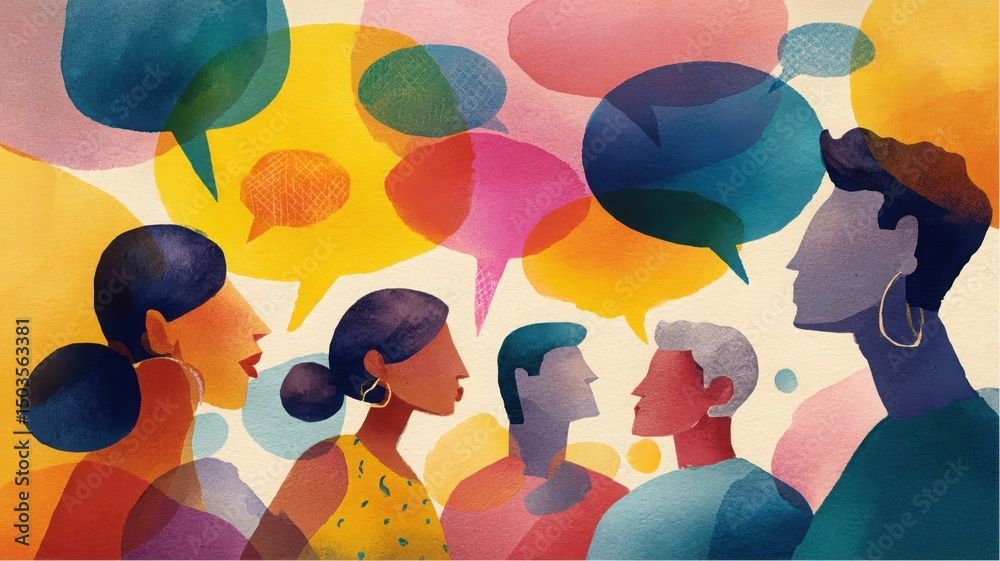
Culture is no longer shaped by campaigns. It’s shaped by conversations: in WhatsApp groups, TikTok comments, podcasts, and around dinner tables. The brands winning aren’t the ones with the biggest budgets. They’re the ones earning a place in those conversations.
Here’s how.
- Stop launching campaigns. Start opening conversations.
A campaign is a monologue with a media buy behind it. A conversation is an invitation.
Stop asking “How do we get people to talk about us?” Start asking “What are people already talking about, and how do we add something meaningful?” Ask questions. Invite user-generated content. Give people ownership of the story.
At Momentum, #SheOwnsHerSuccess didn’t start as a movement. It started as a campaign. Eight seasons later, it’s an ecosystem: live workshops, AI-powered career tools, a sports fund for female athletes, and a community that shows up year-round not just in August. The difference between season one and season eight is consistency of conviction, not budget.
A campaign ends. A conversation compounds.
- Listen more than you talk.
Listening doesn’t fill a content calendar. It doesn’t justify a budget line. It is, however, the most commercially undervalued activity in marketing.
The brands outperforming right now understand not just what people are saying, but how they feel: at 11 pm when someone is anxious about their finances, in the comment section when a product falls short, in the DMs when a customer shares a win.
Social listening isn’t a reputation tool. It’s empathy infrastructure.
- Build communities, not audiences.
Followers are a number. Communities are a relationship.
An audience receives. A community participates. The difference between two million passive followers and fifty thousand deeply engaged advocates is not scale; it’s belonging. One is an audience. The other is a movement.
Metropolitan understands this. Built on the ethos of motho ke motho ka batho babang, the brand has spent over 125 years embedding itself in the financial lives of South African communities. Its Collective Shapers programme delivers mentorship, technical skills, and direct investment to young entrepreneurs in underserved sectors. That’s not a campaign. That’s a community built around shared purpose.
Give people behind-the-scenes access, co-creation opportunities, and the feeling of being an insider. When people feel genuinely valued, they stop being customers. They become your most effective marketers.
- Stand for something. Then back it with action.
In a saturated market, neutrality isn’t a safe position. It’s an invisible one.
Younger South African consumers in particular are watching what brands do, not just what they say. The distinction that matters is purpose versus performance. Posting a green square on Earth Day is not sustainability. Showing up for Women’s Month every August and going silent in September is not women’s empowerment.
Momentum has held its position on women’s financial independence since 2019. Eight consecutive seasons of #SheOwnsHerSuccess, backed by real infrastructure and measurable impact. That’s the difference between a conviction and a campaign.
Does the action match the claim? Consistently, over time? That’s when a position becomes a conviction. And a conviction is what fandoms are built on.
- Treat consumers like people, not demographics.
Today’s consumers belong to multiple communities simultaneously: cultural, professional, aspirational, generational. They cannot be collapsed into a single profile without losing the very thing that makes them interesting.
The most powerful brand narratives emerge from messy communities: audiences that complicate representation rather than simplify it. Stop speaking to a market. Speak to a moment: a shared aspiration, a shared frustration, a shared value.
That is the difference between marketing that lands and marketing that scrolls past.
- Make emotion your measure of success.
Clicks tell you what happened. Emotion tells you why and whether it will happen again.
Track sentiment trajectory, community participation, and brand advocacy alongside the standard dashboard. Trust is slow to build and fast to lose. Brands that build it consistently create loyalty that outlasts any campaign, product cycle, or market shift.
Bonus: the habits that make it all work.
Hard-won. Freely shared.
Think like a producer. Formulas work. Find your step-and-repeat elements and layer in fresh consistency. Audiences love familiarity with a twist.
Act like a storyteller. Prioritise human moments. Embrace imperfection and messiness. Perfect is forgettable.
Edit like a detective. Write without inhibition, then be brutal. As Hemingway (allegedly) said: write drunk, edit sober. The idea that survives both is worth publishing.
Experiment like a scientist. Set aside 20% of your budget for experimentation. Not every idea will succeed, but the ones that do could shape your next decade.
Be curious like a child. Inspiration lives in unlikely places: a niche app, a trend from a completely unrelated industry, a conversation that catches you off guard. The best strategists are the most curious people in the room.
The future belongs to brands that earn attention rather than demand it. Consumers no longer reward the loudest voices. They reward the most human ones.
In the Conversationalist Era, success is not measured by how many people your brand can reach. It’s measured by how many conversations your brand is invited into and whether people choose to keep talking once you’ve left the room.