

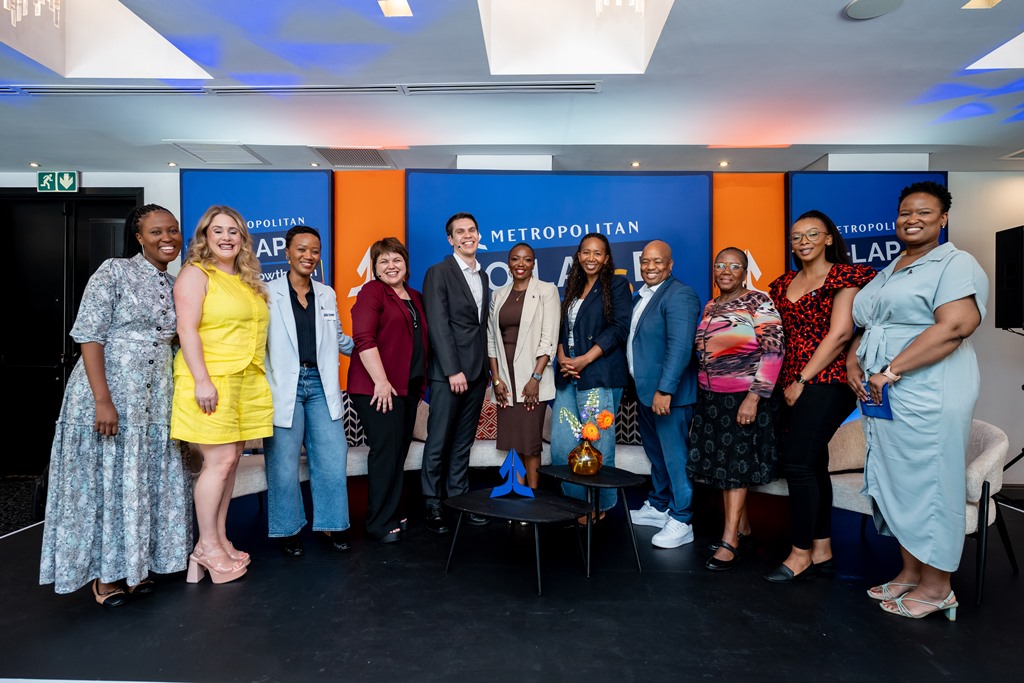
With more than four million funeral policies lapsing in South Africa each year, Metropolitan has pioneered a no-lapse funeral policy solution that could change how millions of South Africans access and retain financial protection.
The new No-Lapse Funeral Growth Plan offering lets consumers build permanent funeral cover through flexible contributions, addressing a major barrier to sustained financial inclusion in South Africa by accommodating people with irregular incomes who find it difficult to maintain fixed monthly premium payments.
The innovation has its roots not in a corporate boardroom, but in conversations with people on the streets of Soweto and Roodepoort, where Metropolitan’s product development and research teams spent time understanding how communities earn and manage their money, and navigate financial hardship.
What emerged was a picture of considerable entrepreneurial resilience, but also of the devastating consequences of losing financial protection. Among the stories were those of people whose funeral policies had lapsed, leaving them with little option but to turn to loan sharks when a family member died.
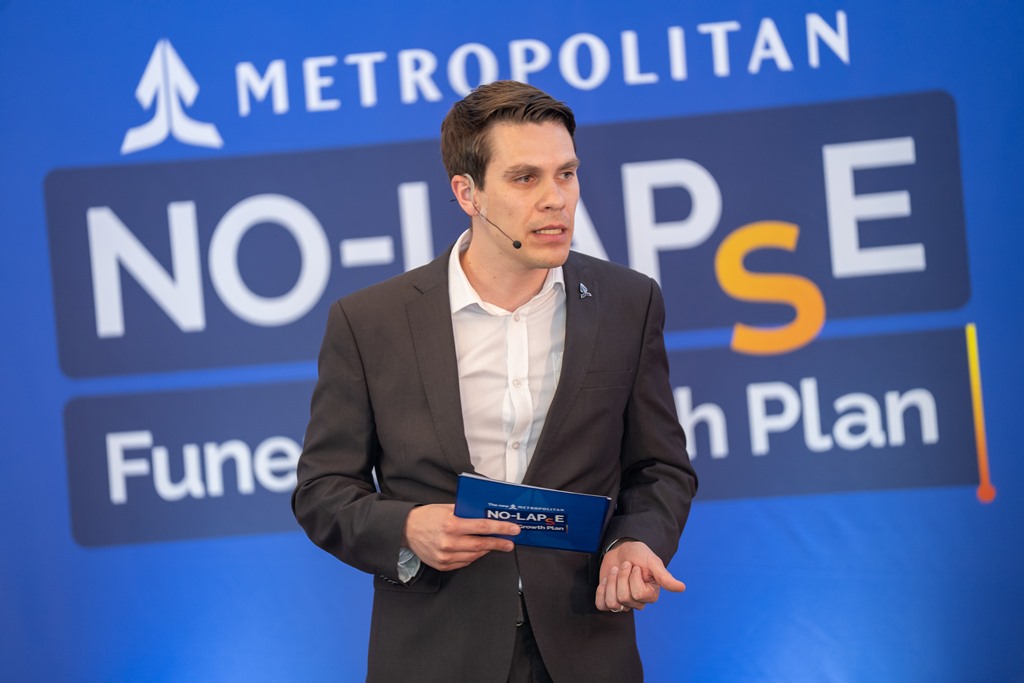 Luke Nel, actuary and Head: No-Lapse & Growth Solutions at Metropolitan, says these engagements challenged the business to rethink some of the fundamental principles of traditional insurance.
“What we discovered was that the problem was not a lack of commitment. Expenses are fixed, but income is not. We needed to be brave enough as a business to solve that social problem first and find a way for people to retain the protection they had worked hard to build.”
Taking financial innovation into communities
Developed over the course of a year, No-Lapse combines quantitative and qualitative research with direct community engagement. Potential customers were involved in both the initial research and subsequent testing of the product.
Seolebaleng Lakaje, Customer Experience & Insights Lead at Metropolitan, says the experience highlighted how South Africans are adapting to limited formal employment opportunities by establishing small businesses, taking on freelance assignments and generating multiple streams of income.
A salon owner might earn significantly more in December than in January, while a seasonal worker, gardener or domestic worker may experience considerable fluctuations in earnings throughout the year.
“What stood out was the resilience of people in these communities. They are finding ways to earn additional income and improve their circumstances. Financial products need to recognise these realities and accommodate the ebb and flow of their earnings,” says Lakaje.
Research by the Bureau of Market Research (BMR) points to a potential market of around 12 million South Africans earning between R1,400 and R5,800 a month, many of whom rely on a combination of grants and irregular sources of income. More than half of those surveyed in this market segment reported struggling to meet their monthly payments. FinScope research shows that nearly 9.5 million South Africans now earn an income through the informal economy, up from 8 million in 2024. Findings from this 2025 survey suggest that many insurance products are designed around stable formal employment, limiting their relevance for South Africans earning irregular or informal incomes and reinforcing the need for more flexible, inclusive risk protection.
Building financial protection that lasts
 Under the No-Lapse offering, consumers can start with a R200 contribution, with funeral cover commencing from their first payment. Once cumulative qualifying contributions reach R1,500 within the first 12 months, the accumulated cover is secured permanently.
Policyholders can then increase their cover whenever their circumstances allow, without losing the protection already secured during periods when they cannot afford to contribute.
Consumers can register through WhatsApp and make payments through a range of digital and cash payment channels, including Pay@ and participating retailers.
Importantly, the product also harnesses the collective financial culture of South African communities. Friends, family members and employers can contribute towards another person’s policy, while a community-based referral programme rewards policyholders with additional funeral cover.
Several households employing the same domestic worker, for example, could contribute towards that individual’s financial protection, with the policy remaining with the worker if their employment circumstances change.
The approach could also complement the role of stokvels and other established community-based financial support structures.
Beyond access to financial services
At the launch in Sandton on Thursday, representatives from the research, stokvel, payments and entrepreneurial sectors explored opportunities to extend formal financial services deeper into underserved communities.
The discussion highlighted the importance of financial education, accessible payment infrastructure, community participation, and products that accommodate the realities of an evolving economy.
The scale of the challenge is significant. According to the Association for Savings and Investment South Africa (ASISA), consumers bought 10.8 million new individual recurring-premium risk policies in 2025, of which 6.2 million were funeral policies. However, risk policy lapses are rising after declining for three consecutive years. In 2025, some 8.7 million risk policies lapsed, compared with 8.2 million in 2024, 8.3 million in 2023 and 8.3 million in 2022. A lapse occurs when the policyholder stops paying premiums on a risk policy, resulting in no fund value.
 “Innovation does not need to be complex. The test is whether the solutions we develop make financial services work better for ordinary South Africans, both when things are going well and when they are not,” says Reabetswe Mosala, Managing Executive for sales and distribution at Metropolitan.
Is this too good to be true, as some in the sample studies have remarked? Lindiwe Gumede, chief marketing officer at Metropolitan, answers it this way: “Many may indeed ask if this is too good to be true, as it is such a novel, innovative and people-focused solution. But the essence of the brand is about financial progress and the spirit of the community. We want to put people first and be there for them, especially when times are tough, and income is not certain.”
While funeral cover is the starting point, the ambition is to demonstrate how community-led innovation can help close South Africa’s formal financial services gap, enabling more people to build lasting financial security, regardless of how or when they earn.
